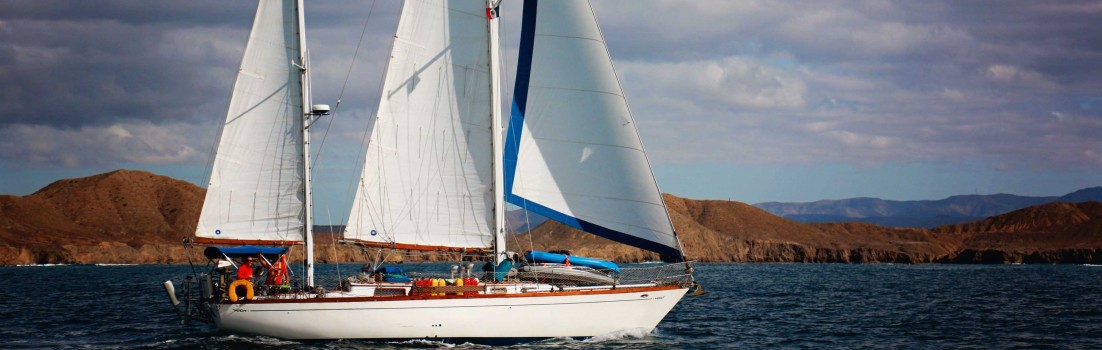
Aboard Astraea

Invest in experiences, not things

May 3, 2013
by Nate

Pool Day

All work and no play makes Nate a dull boy. Lots of work has been completed on the teak deck removal, but not fun. Today after work I filled some more screw holes with epoxy, completely finishing all the areas we’d removed teak from! The weather was hot so Natalie and I took Sully up to the pool for a swim call.

First we put him in his life jacked and let him float. Now I know if he were to ever fall in the water that I’d immediately want to jump in after him because in the pool his face kept going in the water. We’ll let him practice with the life jacket more to see how he gets better at swimming with it.

Trying out the life jacket

Trying out the life jacket

Sully likes standing on the steps in the pool

Sully likes standing on the steps in the pool

With big smiles

With big smiles

Sully also likes riding Natalie's leg around the pool

Sully also likes riding Natalie’s leg around the pool

Pool smiles

Pool smiles

Sully's practicing holding his breath

Sully’s practicing holding his breath with Natalie

He doesn't like holding on to my chest as much as he likes to ride with Natalie

He doesn’t like holding on to my chest as much as he likes to ride with Natalie

Practicing going under the water with me

Practicing going under the water with me

A little grouchy stink face after being taken out of the pool

A little grouchy stink face after being taken out of the pool

May 2, 2013
by Nate

Adios Teak Deck!

Last week Natalie and I began the daunting task of removing our teak decks. So far we’ve had lots of assistance from our friends Eric and Jaime and our dock neighbor, Jay. We’ve learned some things about how to make the process easier too.

#1: Just pry the old stuff out and don’t try to save it

The teak had a sticky tar-like bedding compound on the back so the wood is destined for the garbage can. Just use a pry bar and mallet to get it up and don’t try to save whole boards or unscrew every screw that holds it in.

#2: Use power tools

The Fein Multimaster is great for scraping the leftover teak bedding compound off the decks, an electric screwdriver makes it quicker and easier to remove screws without worrying about prying the old screws out of the deck and possibly delaminating the deck. Use a shop vacuum to suck up all the debris from the deck and screw holes

#3: Use a paint scraper to remove the extra teak bedding compound

I first tried only using the Fein Multimaster with a scraper blade to remove the excess bedding compound and dirt. It didn’t remove enough to go straight to the acetone cleanup stage. I tried cleaning up with acetone and Scotch Brite scrubbing pads, but that was a whole lot of work. Next I tried using a paint stripping wheel, but that scraped the teak bedding compound in to the deck gelcoat. The winning combination is using a manual paint scraper and occasionally a putty knife to get down to the deck. Then the acetone bath is easy.

First we had to remove deck hardware to get to the teak below it

First we had to remove deck hardware to get to the teak below it

Winch removed, ready for demolition

Winch removed, ready for demolition

There's no turning back now. Using acetone to remove the tarry bedding compound

There’s no turning back now! Using acetone to remove the tarry bedding compound

Port side cockpit is cleaned off

Port side cockpit is cleaned off.

Here's an example of the nonskid we intend to replace the teak with. We'll use the bottom paint sample, Sand colored Durabak. More on Durabak in a later post.

Here’s an example of the nonskid we intend to replace the teak with. We’ll use the bottom paint sample, Sand colored Durabak. More on Durabak in a later post.

After another day we had the right outer side of the cockpit clear of teak

After another day we had the right outer side of the cockpit clear of teak

All the old screw holes get reamed out with a larger size drill bit, countersunk and hit at an angle with a dremel in preparation for an epoxy filler

All the old screw holes get reamed out with a larger size drill bit, countersunk and hit at an angle with a dremel in preparation for an epoxy filler

Eric does a little demolition over the transom

Eric does a little demolition over the transom

Jaime, Natalie and Eric helping with the removal process

Jaime, Natalie and Eric helping with the removal process

Transom shot before the deck hardware comes off and stern rail

Transom shot before the deck hardware comes off along with the  stern rail

The cockpit looks pretty barren now with the bimini and stern rail removed.

The cockpit looks pretty barren now with the bimini and stern rail removed.

My dock neighbor, Jay from JAYGAR, helped last Sunday. It's great to have awesome friends to help you on your boat.

My dock neighbor, Jay from JAYGAR, helped last Sunday. It’s great to have awesome friends to help you on your boat.

Here's my next problem. After removing the teak there's a half inch lip (coaming?) in the cockpit that I need to smooth out either by building up with epoxy and fiberglass, or just cut it off with a sawzall or the Fein Multimaster.

Here’s my next problem. After removing the teak there’s a half inch lip (coaming?) in the cockpit that I need to smooth out either by building up with epoxy and fiberglass, or just cut it off with a sawzall or the Fein Multimaster.

April 10, 2013
by Nate

“Bachelor” week boat projects and cruising with Clay

image

Natalie and Sullivan are out of town so it’s amazing how quiet Astraea is without them. It’s way too quiet. So I’m working on boat projects. Our head pump had been making some squeaking noises so I rebuilt it this week.

image

I’ve also countersunk all the screwheads for the floorboards and stopped squeaky floorboards in Sully’s stateroom.

image

image

Saturday I raced on Sailing Schooner Skookum III in the Schooner Cup. We came in 2nd place in class, only beaten by Dennis Connor’s souped up stripped down racing schooner. All the money raised from the race and beer sales went to Navy and Marine Corps Relief Society, so I donated generously.

image

image

image

The evening of the Schooner Cup, Clay and I anchored Astraea out in Glorietta Bay. There were fireworks that night.

image

Clay at the helm on our way back to Pier 32.

The last time Clay and I cruised on a boat overnight was way back in 1999 when we went to the Florida Keys Scout Base and did a weeklong sailing excursion. I was wore out from the schooner race and we had a good weekend.

Now there's location showing up on the radio display

April 1, 2013
by Nate

Adding NMEA GPS Location to a VHF Radio

No GPS position

No GPS position

It all started when I turned on the Furuno RDP-149 NavNet VX2 chartplotter and Icom 504 VHF radio for the first time. I noticed the radio said “No Position No Time” and it was right next to the chartplotter that gets its position and time from its GPS antenna. I want our location to be inputted in to VHF radio so if I need to press the distress button an automatic call can go out to the Coast Guard and our position will be automatically transmitted. It’s also nice that our position will be displayed on the radio so it’s easy to tell buddy boats where we are, or for a less emergent situation like a Securite or Pan Pan call.

So, a little about making the right connections. There’s a protocol called NMEA that allows maritime electronics to communicate. All you have to do is figure out how to set up and connect the equipment and it should work. I read the manuals and did a quick internet search and found that it’s easy to connect my radio and chartplotter together using two wires so the chartplotter can feed the radio time and position data.

I downloaded the chartplotter manual and VHF manual from the manufacturer’s websites.

Icom M504 radio NMEA wiring from the online manual

Icom M504 radio NMEA wiring from the online manual

Wiring data for the Furuno Chartplotter

Wiring data for the Furuno Chartplotter NMEA connection on Data 4

NMEA works like a momma bird and a baby bird (feeding data instead of regurgitated worms). For my setup the momma bird is the chartplotter feeding (transmitting) data to the VHF radio which eats (receives) the data. I used the chartplotter’s TD_DT connection on pin1 of the Data4 jack to transmit the data to the inner conductor of the NMEA IN lead on the VHF. The only tricky part was fining out what “NMEA IN (-)” on the VHF should be connected to on the chartplotter. I guessed that it should connect to the SHIELD/GND and it worked. As soon as I touched the wires the GPS position and time were instantly transmitted to the radio!

Testing the setup from the chartplotter

Testing the setup from the chartplotter

Testing the setup with twisted leads

Testing the setup with twisted leads

Now there's location showing up on the radio display

Now there’s location showing up on the radio display!

I soldered the connections and put heat shrink on my custom wiring to make it professional. The leads are secure in the back of the chartplotter so I won’t buy the $65 Furuno cable. If this installation was outside or in a splash zone I’d buy the waterproof Furuno cable, but it’s far enough under the companionway I’m not concerned about water intrusion.

The connection on the back of the radio all covered up

The connection on the back of the radio all covered up and ready for daily use

After reading more in the Icom manual now I want to connect an AIS to provide ship position information on the chartplotter. All in all the project took me an evening on the boat after Sully went to sleep.

March 31, 2013
by Nate

After Work Sail, Anchoring and Drifting

We’ve been out sailing on Astraea at least once a weekend for the past few weeks. We’re really comfortable taking the boat in and out by ourselves but it makes it nice to go out with other people, or have a destination for our sailing trips instead of just going out and cruising the bay. Friday we went out for a quick sail with Atmun and Justin, some guys I know from work.

Atmun ghost riding the jib

Atmun ghost riding the jib

Saturday we took Astraea across the bay to Trent and Brittany’s house. Since the first time we went to their house I said we should take our boat over and dinghy ashore. We finally did it a year later.

Anchored off the Silver Strand in San Diego Bay

Anchored off the Silver Strand in San Diego Bay

Trent, Bella and Sullivan riding the dinghy

Trent, Bella and Sullivan riding the dinghy

Playing with Bella's toys

Playing with Bella’s toys

Still securely anchored off the strand before sunset

Still securely anchored off the strand before sunset

We didn’t spend the night because anchoring isn’t authorized overnight. As we took the dinghy back to Astraea the San Diego Police boat was pulling up towards us to check if we were doing OK. We said, “No problem, just took a little longer to get underway than expected.” They left us alone to go back to Pier 32.

The next day we hung out with Eric from  Coconutz.

Eric and Sully at Ballast Point Brewery

Eric and Sully at Ballast Point Brewery

Then we had some tasty Mexican food at Miguels in Point Loma and came back to the boat to play. We took Astraea out and flew our new drifter for the first time. The drifter is a giant sail made of lightweight material and it’s used for sailing downwind off the roller furler like a jib.

The maiden sail of our new to us drifter from Minney's Yacht Surplus.

The maiden sail of our new to us drifter from Minney’s Yacht Surplus.

Self drifter shot

Self drifter shot

It’ll take more experimenting with the drifter to find the best way to sail and trim it. We were cruising along at 5 knots with just the drifter up. If we’d also have had the mainsail up I’m sure we’d be making 7.2 knots, hull speed. Thanks to Eric for helping manhandle this gigantic sail.

Eric rolling up the drifter

Eric rolling up the drifter

I’ll be getting back to work on boat projects later, it’s been great to just hang out with friends and not worry about working on the boat for a while. As the weather stays nice I’ll get back to projects.

One of the teak deck boards in the cockpit came right up. We're approaching replacement time quickly.

One of the teak deck boards in the cockpit came right up. We’re approaching replacement time quickly.

Sullivan playing with his empty toy box

Sullivan is as handsome as ever, playing with his empty toy box

More Friends Visit and our First South Bay Family Race

March 25, 2013 by Nate |

On Wednesday we got a new digital camera we ordered in the mail. Natalie and I took Sullivan to the doctor’s office and then we went out to Balboa Park to play in the grass.

A pinecone!

Sullivan warmed up to the grass and played with a pinecone

On Friday Shaun and Michelle, friends from Everett, joined us for an evening sail.

Shaun and Michelle, our friends from Everett came along and enjoyed

Shaun and Michelle, our friends from Everett came along and enjoyed the sunshine

We decided to take the boat over to the public dock on Coronado and walked a few blocks over to the Coronado Brewing Company for drinks and dinner. Unfortunately, they were out of my favorite their red ale.

Natalie and I are starting a Sea Scout Ship at Chula Vista Marina. We took out one of the volunteer leaders, Alfonso, and our lone Sea Scout.

Alfonso gave Sully some lessons behind the wheel

Alfonso gave Sully some lessons behind the wheel

This gallery contains 17 photos

March 21, 2013
by Nate
Comments Off

Rebuilt Bilge Pump

The old and busted pump handle insert

The old and busted pump handle insert

Astraea has a Henderson MK 5 manual bilge pump in the cockpit. It sucks water from the deepest part of the bilge and gets the final water from the bottom of the bilge that the other pumps leave behind. A few weeks ago while I was pumping the pump rocker arm assembly broke and I knew it was time to rebuild the pump.

I ended up buying 3 service kits to get all the right parts. The first was the rocker arm assembly, Whale part number AS0531. When I disassembled the pump I found that the diaphragm was in good condition, but the diaphragm plates that hold it were made of aluminum and had corroded badly and needed replaced. I ordered a new diaphragm plate kit and rebuild kit, Whale part numbers AS0561 and AK8050.

The rebuild was easy, just remove a few screws, clean everything up with a rag and reinstall. The whole rebuild took just a few hours and $160.52. I bought my parts from Downwind Marine online and they were delivered two days later.


Rebuilt, watertight cover reinstalled and ready to go to sea

Rebuilt, watertight cover reinstalled and ready to go to sea

March 7, 2013
by Nate

Sailing with Friends and Family

Over the past few weeks we’ve been really blessed to be able to sail with friends and family.

First Dave and Laurie came to visit. They’re friends from back in Everett. They used to cruise a Catalina 27 around Puget Sound every summer with 4 kids and two adults onboard! They’re awesome.

Sailing up the bay with Natalie, Dave and Laurie

Sailing up the bay with Natalie, Dave and Laurie

We effortlessly tacked up the bay. It's great having experienced crew aboard!

We effortlessly tacked up the bay. It’s great having experienced crew aboard!

And we saw the Californian cruise by. Glad we saw it, because dave didn't see it dead ahead hidden behind the mast!

And we saw the Californian cruise by. Glad we saw it, because Dave didn’t see it dead ahead hidden behind the mast!

The next weekend Natalie’s Uncle Tim and Aunt Martha came to stay with us and cruise on the boat. We made a short trip up to Point Loma Marina.

Fearless Captain and Admiral

Fearless Captain and Admiral

Close hauled in the South Bay

Close hauled in the South Bay 

Tim and Martha, great crew to have aboard!

Tim and Martha, more great crew to have aboard!

After Tim and Martha left we had a few hours to ourselves before Eric and Amy came aboard again. Eric’s in the Navy too and he’s transferring to the east coast so we had to go out for a sunset cruise before they departed San Diego.

On our way towards downtown. We motored past the Maritime Museum's ships, enjoyed the sunset and headed back to the slip.

On our way towards downtown. We motored past the Maritime Museum’s ships, enjoyed the sunset and headed back to the slip.

San Diego after sunset

San Diego after sunset

Eric's got the wheel and I've got the conn

Eric’s got the wheel and I’ve got the conn

Natalie, Amy and Sully enjoying the sunset cruise

Natalie, Amy and Sully enjoying the sunset cruise

That weekend was busy! We finished it by attending Navy Yacht Club’s Opening Day ceremony. What a great two weeks on the water!

March 5, 2013
by Nate

Trip to Everett, WA

I had the opportunity to travel to Everett with Natalie and Sullivan for work. While we were there we got to hang out with our friends, attended the Milltown Sailing Association banquet, go to the boat show, visit the computer museum and do some sailing! It was a great month.

February 20, 2013
by Nate

Engine Zincs

Astraea has a Westerbeke 44 Engine. In the heat exchanger there is a pencil zinc exposed to the saltwater cooling loop. The pencil zinc corrodes away sacrificially instead of the engine. Monthly I check the zinc to see how much has corroded. In December I changed the zinc out with a new one. I searched online for the zincs and found them at first for $6 each. After further searching on Amazon I found them for $2.50 each plus $10 shipping. Since they’re a common wear item I bought 10 to bring the total price each to $3.65.

The part information is here for anyone else who may be looking for the best deal on these zincs. Westerbeke / Universal Part number 011885. They’re shipped and sold by RotoMetals, a 5 star seller from San Francisco. Here’s the link to the best priced zincs.

All I need to change the zinc in the heat exchanger is a 9/16 socket wrench. There's an old and new zinc for a reference of when to change out. It's best to leave some pencil on the zinc and not go down to the nub, because then you've gone too far and may have begun to damage your engine.

All I need to change the zinc in the heat exchanger is a 9/16 socket wrench. There’s an old and new zinc to show when to change out. It’s best to leave some pencil on the zinc and not go down to the nub, because then you’ve gone too far and may have begun to damage your engine.